 how-to
Manage Smoke and Carbon Monoxide Alarm Regulations
Table of Contents
- Why Smoke and Carbon Monoxide Alarms Matter for Landlords
- Understanding Your Landlord Fire Safety Obligations
- Setting Up Alarms: Types, Placement, and Standards
- Creating a Carbon Monoxide Alarm Testing Schedule
- How to Document Alarm Testing and Maintenance
- Common Compliance Mistakes and How to Avoid Them
- Building Your Compliance Checklist
- Conclusion
- Frequently Asked Questions
Last Updated: October 1, 2026
Why Smoke and Carbon Monoxide Alarms Matter for Landlords
Landlords who fail to install and maintain proper fire safety equipment face serious consequences. Fines can reach thousands of pounds, and worse, you could be held liable if someone is harmed. At PPS Property Management, we work with landlords across the Fylde Coast to ensure they stay compliant with evolving fire safety rules.
Smoke and carbon monoxide alarms are not optional extras. They're legal requirements that protect your tenants and your business. The regulations around these devices change regularly, and staying on top of them is essential.
This guide covers everything you need to know about managing smoke and carbon monoxide alarm regulations. We'll walk through the rules, show you how to set up systems correctly, and give you practical tools to avoid costly mistakes.
Understanding Your Landlord Fire Safety Obligations
Your responsibilities as a landlord are set out in the Fire Safety Act 2021 and the Housing Health and Safety Rating System (HHSRS). These laws require you to provide working alarms and keep detailed records of all testing and maintenance.
The key obligation is simple: you must install smoke alarms on every storey of the property where there is a room used as living accommodation. You must also install at least one carbon monoxide alarm in any room with a gas appliance (excluding cookers).
But installation alone isn't enough. You must:
- Test alarms regularly (typically monthly for landlords, though tenants should test weekly)
- Replace batteries when needed
- Keep written records of all tests and maintenance
- Replace faulty alarms immediately
- Ensure alarms meet British Standards (BS 5839-6 for smoke alarms, BS 7860 for carbon monoxide alarms)
Many landlords assume their tenants will manage this. That's a mistake. The legal duty falls on you, the property owner. Tenant neglect doesn't excuse non-compliance.
Setting Up Alarms: Types, Placement, and Standards
Getting the physical setup right is the foundation of compliance. The wrong alarm in the wrong place won't protect anyone and won't satisfy regulations.
Smoke alarm positioning and requirements
Smoke alarms must be positioned on the ceiling or high on walls where smoke will reach them quickly. Install them:
- In every room used as living accommodation (bedrooms, lounges, dining rooms)
- On every storey of the property
- Away from kitchens (to avoid false alarms from cooking steam)
- Away from bathrooms and shower rooms
- At least 30 centimetres from walls and light fittings
Use interconnected alarms where possible. When one alarm detects smoke, all alarms sound. This gives tenants maximum warning time.
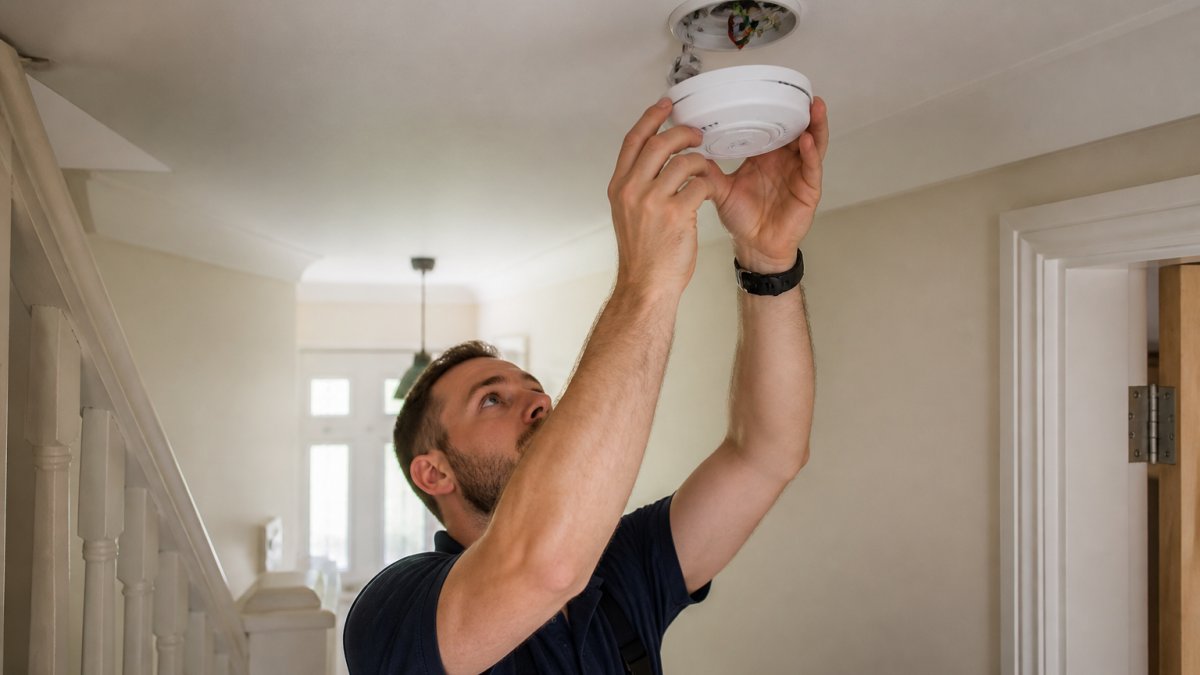
Mains-powered alarms with battery backup are the standard. They're more reliable than battery-only models and reduce the burden on tenants to remember replacements.
Carbon monoxide alarm placement in gas appliance areas
Carbon monoxide alarms must be placed in any room with a gas appliance. This includes:
- Kitchens with gas cookers
- Rooms with gas boilers
- Bedrooms with gas heaters
- Lounges with gas fires
Position the alarm on the wall at breathing height (ideally 1-3 metres above the floor), or on a shelf near the appliance. Never place it in a cupboard or behind furniture where it can't detect gas properly.
Use battery-powered alarms or mains-powered units. Battery-only models are acceptable here since gas appliance rooms are typically not living spaces.
Creating a Carbon Monoxide Alarm Testing Schedule
A testing schedule keeps you organised and creates a paper trail. Without one, you'll miss tests and won't have evidence of compliance.
Set up a simple system:
- Test all alarms monthly (or assign this to your managing agent)
- Record the test date, result, and any action taken
- Replace batteries annually (even if they still work)
- Replace the entire alarm every 7-10 years (check manufacturer guidance)
Many landlords use spreadsheets or simple checklists. Some use property management software that sends automatic reminders. Either works, as long as you stick to the schedule.
For properties with multiple units, assign responsibility clearly. If you're managing the property yourself, set phone reminders. If you use a managing agent, confirm in writing that they'll handle testing and provide monthly reports.
How to Document Alarm Testing and Maintenance
Documentation is your legal protection. Without it, you have no proof that you've complied with regulations.
Keep records that show:
- Date and time of each test
- Which alarms were tested
- Test result (pass or fail)
- Who carried out the test
- Any faults found and how they were fixed
- Date of any alarm replacement
- Battery replacement dates
Use a simple template or log sheet. Include:
| Date | Property | Alarm Type | Location | Test Result | Action Taken | Signature |
|---|---|---|---|---|---|---|
| 15 Oct 2026 | 42 Main Street | Smoke | Hallway | Pass | None | J. Smith |
| 15 Oct 2026 | 42 Main Street | CO | Kitchen | Pass | None | J. Smith |
| 12 Nov 2026 | 42 Main Street | Smoke | Hallway | Fail | Replaced | J. Smith |
Store records digitally and in hard copy. Keep them for at least three years. If an enforcement officer visits, you'll need to show evidence of testing going back months.
How to document landlord safety compliance
Common Compliance Mistakes and How to Avoid Them
Most landlords slip up in the same ways. Knowing these traps helps you stay clear.
Mistake 1: Installing alarms but not testing them. Alarms fail. Batteries die. You won't know unless you test. Set a calendar reminder for the first of each month.
Mistake 2: Assuming tenants will test alarms. Tenants often forget or don't know how. Make testing your responsibility, not theirs.
Mistake 3: Skipping carbon monoxide alarms. Many landlords forget these entirely. If there's a gas appliance, there must be a carbon monoxide alarm. No exceptions.
Mistake 4: Installing battery-only smoke alarms in living spaces. Tenants remove batteries for other uses. Mains power with battery backup is the standard for good reason.
Mistake 5: Keeping poor records. "I tested it, I'm sure" isn't evidence. Write it down. Date it. Sign it. Keep it for years.
Mistake 6: Ignoring faulty alarms. If an alarm fails a test, replace it within days, not weeks. A broken alarm is worse than no alarm, it gives false security.
Building Your Compliance Checklist
Use this checklist to ensure you're covering all bases. Work through it quarterly.
- All smoke alarms installed on every storey where there are living rooms
- All smoke alarms positioned on ceilings or high on walls
- Carbon monoxide alarm installed in every room with a gas appliance
- All alarms meet British Standards (BS 5839-6 for smoke, BS 7860 for CO)
- Alarms tested this month and result recorded
- All batteries checked and replaced if needed
- Any faulty alarms identified and replaced
- Testing records kept and filed safely
- Tenants informed of alarm locations and how to use them
- Managing agent (if used) provided written testing instructions
- Three years of testing records available for inspection
Print this checklist and keep it with your property records. Review it before each test cycle.
British Standards for fire safety alarms
Conclusion
Managing smoke and carbon monoxide alarm regulations isn't complicated, but it does require consistency. Install the right alarms in the right places, test them monthly, keep careful records, and you'll stay compliant.
If you're managing multiple properties or don't have time for regular testing, that's where PPS Property Management can help. We handle all alarm testing, maintenance scheduling, and documentation for landlords across the Fylde Coast. Our team ensures you're always compliant with current regulations, with full records available whenever you need them. Get in touch with PPS Property Management for a free consultation and discover how we can take this responsibility off your shoulders.
Frequently Asked Questions
What are the current smoke and carbon monoxide alarm regulations for landlords?
As of 2026, landlords must install working smoke and carbon monoxide alarms in all rental properties. Smoke alarms must be installed on every level of the property, with at least one in the main living area. Carbon monoxide alarms are required in any room with a gas appliance or solid fuel-burning appliance. All alarms must be in working order before tenants move in and throughout the tenancy. Failure to comply can result in significant penalties and legal action.
How often should landlords test smoke and carbon monoxide alarms?
Smoke and carbon monoxide alarms should be tested at least monthly by pressing the test button. Many landlords incorporate this into their carbon monoxide alarm testing schedule during routine property inspections. Full professional servicing may be required annually depending on alarm type. Tenants should also be instructed to test alarms regularly and report any faults immediately. Document all testing dates and results for compliance records.
What documentation do I need to keep for alarm testing?
Maintain a detailed log showing the date each alarm was tested, who performed the test, and the result (passed or failed). Include records of any repairs, replacements, or maintenance work completed. Photographs of alarm locations and installation dates are helpful. Store this documentation for at least five years. Proper records demonstrate due diligence if a dispute arises and support your landlord fire safety obligations compliance.
What happens if I fail to comply with alarm regulations?
Non-compliance with smoke and carbon monoxide alarm regulations can result in substantial penalties, enforcement notices from local authorities, and potential prosecution. Local councils can issue improvement notices requiring you to install alarms within a specified timeframe. Failure to comply may lead to fines, and in serious cases, you may be prohibited from letting the property. Additionally, if a tenant is injured due to missing or faulty alarms, you could face civil liability claims.