 how-to
How to Handle Rental Property Maintenance Requests
Table of Contents
- Why a Clear Maintenance Process Matters
- Setting Up a Tenant Repair Request Form
- Understanding Urgent Repairs in Rented Property
- Meeting Landlord Repair Response Times
- How to Find Reliable Contractors for Rental Properties
- Documenting and Communicating Throughout the Process
- Handling Unresolved or Disputed Repairs
- Frequently Asked Questions
Last Updated: October 15, 2026
Why a Clear Maintenance Process Matters
A solid system for handling rental property maintenance requests is the difference between a property that holds value and one that deteriorates. When tenants know how to request repairs and you have a clear process for responding, problems get fixed before they become expensive. Emergencies get handled fast. You avoid disputes. Your tenants stay longer.
A clear rental property maintenance requests system cuts that time in half and protects you legally.
This guide walks you through building a process that works.
Setting Up a Tenant Repair Request Form
Your tenants need a simple way to report problems. A form does two things: it captures the information you actually need, and it creates a record. That record matters if a dispute arises later.
Essential Information to Collect
A basic form should ask for:
- The exact location of the problem (which room, which appliance, which wall)
- What's wrong (describe it in plain language, not technical jargon)
- When it started (today, last week, gradually over time)
- Whether it's urgent (is the tenant unable to use the property safely or normally)
- Contact details (phone number and best time to reach them)
- Photos (optional, but helpful for contractors)
Keep it short. A form that takes five minutes to fill gets completed. One that takes twenty gets abandoned.
Many landlords add a severity scale: tick a box for "urgent," "routine," or "cosmetic." This helps you sort requests and decide what gets done first.
Choosing Your Submission Method
Your form can live in three places: email, a web portal, or a messaging app. Email is simplest to set up. A portal (like a shared document or property management software) is easier to track. Some tenants prefer messaging apps because they're fast.
Pick one and stick with it. Tell every tenant where to send requests when they move in. Include it in the tenancy agreement. Post it on your website. The easier you make it, the more tenants will use it instead of calling at odd hours.
Understanding Urgent Repairs in Rented Property
Not every repair is urgent. Knowing the difference saves money and keeps you compliant with the law.
What Counts as an Emergency
An urgent repair is one that makes the property unsafe or unusable. These include:
- No heating or hot water
- No electricity or gas supply
- Broken locks or doors (security risk)
- Burst pipes or serious leaks
- Gas leaks
- Structural damage
- Pest infestations
A broken cupboard door is not urgent. A broken boiler in winter is. If a tenant can still use the property safely, it's routine.
Your Legal Obligations
Landlords must carry out repairs to keep a property fit for habitation (Guide for tenants: Homes (Fitness for Human Habitation) Act 2018). The law requires you to fix urgent problems quickly. How quickly depends on what's broken.
For emergency repairs (heating, water, electrics), you must act quickly. For other urgent repairs, within a reasonable timeframe depending on the issue. For routine repairs, you typically have a longer period.
These timescales are not optional. Failing to meet them can result in penalties and claims against you. Tenants can also pursue repairs themselves and deduct the cost from rent if you fail to act, which costs you more in the end.
Keep records of when you received the request and when the work was completed. This protects you if a tenant later claims you were slow to respond.
Meeting Landlord Repair Response Times
Speed matters. It protects your property and your relationship with your tenants.
Emergency Response Standards
For urgent repairs, your first step is to acknowledge the request within 24 hours. Tell the tenant you've received it and when you'll send a contractor. Then book the contractor immediately.
If the problem is genuinely dangerous (gas leak, no heating in winter, electrical fault), the contractor should attend promptly. Many emergency plumbers and electricians offer same-day or next-day slots.
Keep the tenant updated. A text or email saying "contractor arriving Thursday at 2pm" takes two minutes and prevents frustration.
Routine Repair Timescales
For non-urgent repairs, aim to respond within 3 to 7 days. This means acknowledging the request, assessing what's needed, and booking a contractor. Most routine work (replacing taps, fixing hinges, patching plasterboard) can wait a week without causing problems.
Set a realistic target and stick to it. If you say you'll call back within 3 days, do it. Tenants who feel ignored are more likely to pursue repairs themselves or withhold rent.
How to Find Reliable Contractors for Rental Properties
A good contractor is worth their weight in gold. A bad one costs you time, money, and tenant complaints.
Vetting and Selection Criteria
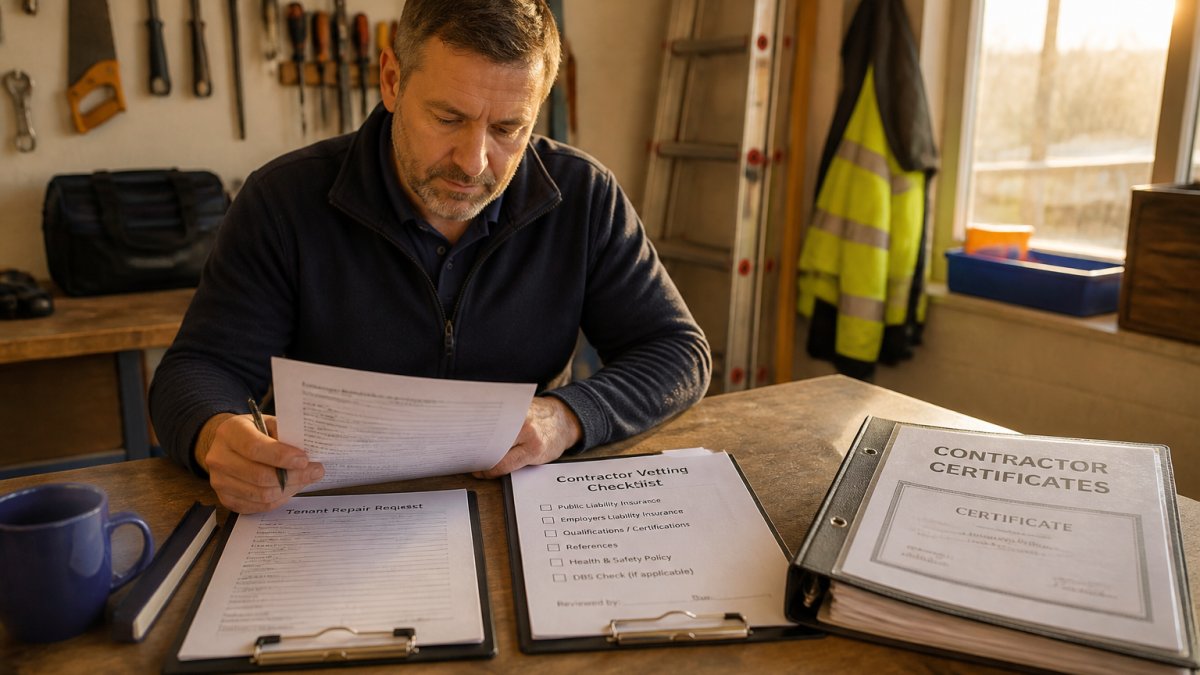
Start by asking other landlords for recommendations. Local property forums and landlord associations often have lists of trusted tradespeople. Ask specifically about reliability, pricing, and whether they're willing to work with tenants when the landlord isn't present.
Check qualifications. For gas work, the contractor must be Gas Safe registered. For electrical work, they should be NICEIC or NAPIT certified. For any work involving asbestos, they need proper training (Asbestos information, instruction and training).
Get quotes from at least two contractors for routine jobs. Compare price, but also timeline and whether they offer guarantees on their work. A slightly more expensive contractor who finishes on time is better than a cheap one who delays.
Ask for references. A contractor who's worked with other landlords should be happy to provide contact details. Call those references and ask about punctuality, quality, and whether they left the property clean.
Building Your Trusted Contractor Network
Once you find contractors you trust, keep them. Build relationships. Call the same plumber, electrician, and general handyperson for repeat jobs. They'll prioritise your calls, give you faster turnaround times, and often offer better rates for regular work.
Create a simple spreadsheet with contractor names, phone numbers, specialities, and the date of their last job. When an emergency happens, you'll have their number instantly.
For emergency work outside normal hours, agree rates in advance. Know what you'll pay before you need them, so you're not shocked by the invoice.
Documenting and Communicating Throughout the Process
Every repair should have a paper trail. This protects you if disputes arise later.
Record Keeping Standards
From the moment a tenant requests a repair, document it:
- Date and time of request
- How the request was made (email, phone, form)
- What the tenant reported
- Your response (when you acknowledged it)
- Contractor details and appointment date
- Cost of repair
- Date work completed
- Tenant's confirmation that work is satisfactory
Use a simple spreadsheet or property management software to track this. The goal is to show that you responded quickly and fixed the problem properly.
Keep copies of contractor invoices and photos of the work before and after. If a tenant later claims you ignored a repair, you can prove you didn't.
Keeping Tenants Informed
Tenants get frustrated when they don't know what's happening. Send updates at each stage:
- "We've received your request for a new kitchen tap. A plumber will call you within 2 days to arrange a time."
- "The plumber is booked for Thursday at 10am. They'll call you an hour before to confirm."
- "The tap has been replaced and tested. Please check it works and let us know if there are any issues."
These messages take minutes but prevent complaints and show you're taking the issue seriously.
If a repair takes longer than expected, tell the tenant why. "The part is on back-order, arriving next Tuesday" is better than silence.
Handling Unresolved or Disputed Repairs
Sometimes a tenant isn't happy with the repair. The fix didn't work, or they think the contractor did poor work. Handle this quickly.
First, ask the tenant for specifics. What exactly isn't working? When did the problem reappear? Get photos if possible.
Contact the contractor and explain the issue. Most reputable tradespeople will revisit for free if the work didn't meet standard. If they won't, find another contractor and ask them to assess the original work. Get their opinion in writing.
If the contractor refuses to return and the tenant is right, you'll need to pay for the work to be redone. This is frustrating, but it's faster and cheaper than a dispute escalating.
Keep all communications in writing. If a complaint goes to a tribunal later, written records prove you acted fairly.
Handling rental property maintenance requests well means building systems before emergencies happen. A clear form, a list of trusted contractors, and a simple tracking method take hours to set up but save weeks of stress later.
PPS Property Management handles this for landlords across the Fylde Coast. We manage repair requests, coordinate contractors, and keep records so you don't have to. If you're managing multiple properties or handling maintenance from a distance, we can take the burden off your shoulders. Get in touch for a free consultation and see how we can help protect your investment.
Frequently Asked Questions
How quickly should a landlord respond to a maintenance request?
Response times depend on the urgency of the repair. For emergencies (loss of heating, water damage, electrical hazards), you must respond promptly and arrange repairs immediately. For routine maintenance, aim to acknowledge the request within a reasonable timeframe and schedule non-urgent work accordingly. Prompt acknowledgement reassures tenants that their request has been received, even if the actual repair takes longer to arrange. Document your response time in your maintenance records.
What information should be included in a tenant repair request form?
A comprehensive tenant repair request form should capture: tenant name and contact details, property address, detailed description of the problem, location within the property, date the issue was discovered, photographs if possible, and preferred contact method. Ask tenants to rate urgency (emergency, soon, or routine) and note any safety concerns. Include a section for tenant availability for access. This structured approach prevents miscommunication and ensures contractors have all necessary details before arrival.
What makes a repair urgent in a rental property?
Urgent repairs include loss of heating (in winter), no hot water, electrical faults, gas leaks, burst pipes or flooding, roof leaks affecting habitability, broken locks or security issues, and pest infestations. These pose health, safety, or security risks and require prompt action. Routine repairs (dripping taps, minor decoration, broken blinds) can wait a reasonable period. Clear guidance helps tenants understand priority levels and prevents false alarms, while ensuring genuine emergencies receive immediate attention.
How can I ensure contractors I hire for rental properties are reliable and trustworthy?
Check qualifications relevant to the work (Gas Safe registration for gas work, NICEIC or NAPIT for electrical work). Request references from other landlords, verify insurance cover, and check online reviews. Meet contractors in person when possible and confirm pricing in writing before work begins. Build a core group of trusted, local contractors who understand rental property standards and respond quickly. Obtain competitive quotes for major work and monitor job quality. A reliable contractor network is essential for meeting response time commitments to tenants.