 how-to
How to Avoid Landlord Fines 2026: A Complete Guide
Table of Contents
- What You'll Need Before You Start
- Step 1: Comply with Landlord Deposit Protection Rules 2026
- Step 2: Meet Landlord Gas and Electrical Safety Certificate Requirements
- Step 3: Understand Decent Homes Standard Requirements
- Step 4: Keep Accurate Records to Prove Compliance
- Common Mistakes That Lead to Landlord Fines
- How a Property Manager Can Help You Avoid Fines
- Frequently Asked Questions
Last Updated: September 11, 2026
What You'll Need Before You Start
Avoiding landlord fines in 2026 starts with treating compliance as a system, not a scramble. The rules have tightened, enforcement has become data-driven, and councils now cross-check records automatically. Landlords who get fined are rarely negligent; they are simply disorganised.
This guide walks you through how to avoid landlord fines 2026 with a clear, step-by-step approach. We will cover deposit protection, gas and electrical certificates, the Decent Homes Standard, and the record-keeping that proves you did the right thing.
Before you begin, gather these essentials:
- A written schedule of every certificate and its expiry date
- Your tenancy deposit scheme membership details
- Contact details for a Gas Safe registered engineer and a qualified electrician
- A folder (digital or physical) for certificates, receipts, and inspection logs
- Access to the government's official guidance on [landlord responsibilities and safety(https://ppspropertymanagement.com/blog/hhsrs-explained-hazard-scoring-system) requirements | gov.uk]
Step 1: Comply with Landlord Deposit Protection Rules 2026
Landlord deposit protection rules 2026 require you to place a tenant's deposit in a government-approved scheme within 30 days of receiving it, then serve the prescribed information to the tenant. Miss either deadline and you lose the right to deduct for damages.
Three schemes operate in the sector, and each works slightly differently:
- Custodial schemes hold the money for you, free of charge
- Insurance-based schemes let you keep the deposit but charge a fee and require you to cover it
- Insured schemes suit landlords with high deposit volumes
Whichever you choose, the process is the same. Register the deposit, protect it, and issue the prescribed information. Keep dated proof of all three.
The penalties for getting this wrong are severe. Courts can order you to repay the deposit plus a penalty of between one and three times its value, and you cannot use a possession notice while the deposit remains unprotected. Since 1 May 2026, possession now runs entirely through the courts, so deposit compliance matters more than ever.
Step 2: Meet Landlord Gas and Electrical Safety Certificate Requirements
Landlord gas and electrical safety certificate requirements are the two areas where lapses carry criminal liability. A gas safety check is annual and mandatory for every property with a gas appliance. An electrical safety inspection is required at least every five years.
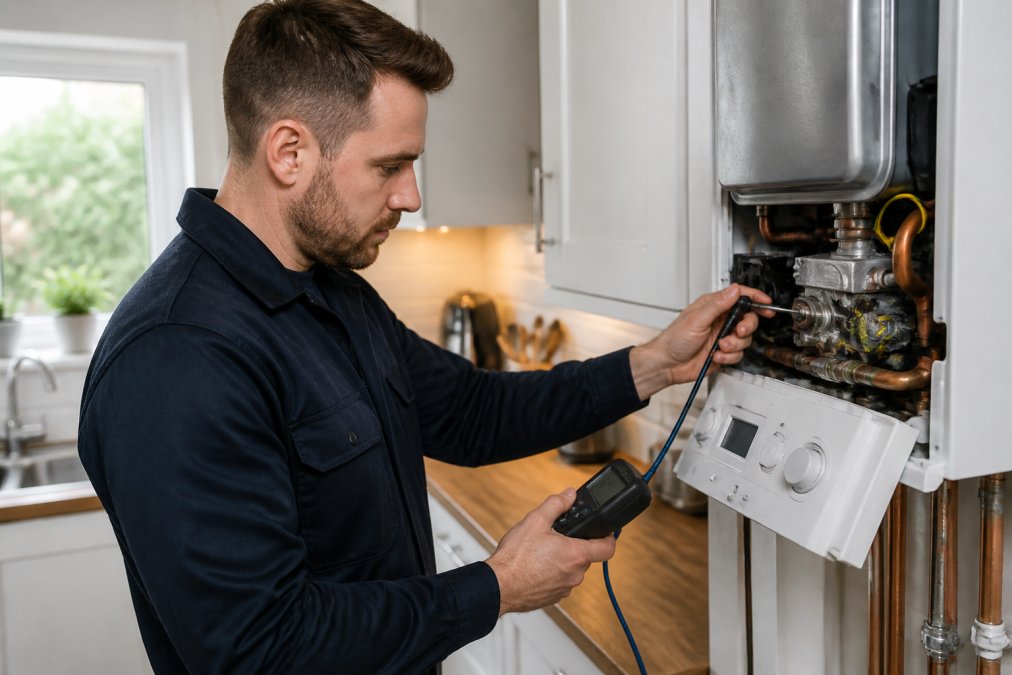
Gas Safety Certificates (CP12)
A Gas Safety Certificate, often called a CP12, must be issued by a Gas Safe registered engineer every 12 months. You must give the tenant a copy within 28 days of the check and keep records for at least two years.
The check covers all gas appliances, flues, and pipework. If an appliance fails, you must act on the engineer's advice, which may mean repair or disconnection.
Electrical Safety Standards (EICR)
An Electrical Installation Condition Report, or EICR, assesses the fixed wiring and fittings. It must be carried out by a qualified electrician at least every five years, and more often if the report flags a shorter interval.
You must supply the report to existing tenants within 28 days and to new tenants before they move in. If remedial work is needed, complete it within the stated timeframe and retain the proof.
The Health and Safety Executive guidance on gas safety in rented homes sets out the legal duties in full, and it is worth reading alongside your engineer's report.
Step 3: Understand Decent Homes Standard Requirements
Decent Homes Standard requirements now extend to the private rented sector, and they set a minimum quality bar every property must meet. A home must be free of serious hazards, be in a reasonable state of repair, have reasonably modern facilities, and provide effective heating and insulation.
The standard links directly to the Housing Health and Safety Rating System, which councils use to grade hazards. A property with damp, mould, or a faulty heating system can fail on multiple counts.
Meeting the standard is not simply about avoiding a fine. It is about reducing the risk of a council enforcement notice, which can force you to carry out works at your own cost and restrict how you let the property.
Practical steps to stay compliant:
- Fix damp and mould at the source, not just the surface
- Ensure heating systems work reliably and are controllable
- Check insulation and ventilation in every room
- Address any Category 1 hazard the moment it is identified
Step 4: Keep Accurate Records to Prove Compliance
Accurate records are your defence when a dispute or inspection arises. A landlord who can produce a complete paper trail rarely faces the harshest penalties, because the evidence shows good faith and diligence.
Keep the following in one place:
| Record | Retention Period | Why It Matters |
|---|---|---|
| Gas Safety Certificate | 2 years | Proves annual check completed |
| EICR report | 5 years | Shows wiring inspected on schedule |
| Deposit protection proof | Until deposit returned | Defends against penalty claims |
| Prescribed information | Until tenancy ends | Separate legal duty from protection |
| Repair and inspection logs | 6 years | Demonstrates maintenance history |
Store digital copies in the cloud as well as on paper. If a tenant disputes a repair or a council requests evidence, you can respond the same day.
The official guidance on electrical safety standards in the private rented sector confirms the reporting duties and retention periods in detail.
Common Mistakes That Lead to Landlord Fines
The same errors appear again and again, and most are entirely avoidable. Understanding them is the fastest route to staying out of trouble.
- Letting certificates expire. A lapsed gas or electrical certificate is a criminal offence, not a paperwork slip.
- Protecting the deposit late. The 30-day window is strict, and there is no grace period.
- Forgetting the prescribed information. Many landlords protect the deposit but skip this separate step.
- Ignoring repair requests. Delayed responses turn a minor fix into a hazard notice.
- Failing to keep proof. Without records, you cannot demonstrate compliance even when you have done the work.
Each of these mistakes shares a root cause: relying on memory instead of a system. A simple calendar with automated reminders removes most of the risk overnight.
How a Property Manager Can Help You Avoid Fines
A property manager removes the administrative burden that causes most fines. PPS Property Management handles compliance management as standard, including gas safety, EPC, and EICR scheduling, so certificates never lapse.
For landlords based elsewhere, the value is obvious. Our team carries out inspections, arranges maintenance, and provides 24/7 emergency response, which means you are not coordinating contractors from a distance. We are a family-run business with deep local roots, and we offer four service levels so you only pay for what you actually need.
Our clients consistently rate us five stars, and we pride ourselves on transparency with no hidden fees. If you own properties across the Fylde Coast and want a partner who keeps you compliant, the official guidance on landlord and tenant rights and responsibilities is worth reading alongside a conversation with our team.
Frequently Asked Questions
What are the new landlord penalties under the Renters' Rights Act?
The Renters' Rights Act introduces new penalties for non-compliance. Local authorities can issue civil penalties of up to £7,000 for a first offence and up to £40,000 for serious or repeated breaches. These can be issued as an alternative to prosecution. Offences include failing to provide a written tenancy agreement, not protecting a deposit correctly, or renting out a property that fails to meet the Decent Homes Standard. It is crucial for landlords to understand these new powers to avoid significant financial penalties.
How do I ensure my property meets the 2026 Decent Homes Standard?
To meet the Decent Homes Standard, your property must be free from serious health and safety hazards, be in a reasonable state of repair, have reasonably modern facilities, and provide a reasonable degree of thermal comfort. This means ensuring your heating system is efficient, there is no damp or mould, and the structure is sound. Conducting regular inspections and addressing maintenance issues promptly are key. A professional property manager can help you assess your property against these criteria.
What are the requirements for protecting tenant deposits in 2026?
You must protect a tenant's deposit in a government-approved tenancy deposit scheme within 30 days of receiving it. You must also provide the tenant with the prescribed information about the scheme within the same 30-day period. This includes details of the scheme, how the deposit is protected, and the procedures for getting it back at the end of the tenancy. Failure to comply can result in fines of up to three times the deposit amount.
How can I prove compliance to avoid local authority fines?
You must keep clear and organised records. This includes up-to-date gas safety certificates, EICR reports, deposit protection certificates, and the prescribed information you gave to your tenant. For the Decent Homes Standard, keep records of inspections and any remedial work done. If a local authority requests proof of compliance, you should be able to provide these documents quickly. Using a property management service can ensure all your records are maintained and easily accessible.
Compliance in 2026 rewards landlords who plan ahead and document everything. If you would rather hand the paperwork to someone who does it daily, PPS Property Management can manage your gas safety, EPC, and EICR obligations, respond to emergencies within hours, and keep your records audit-ready. Get started with PPS Property Management and turn compliance from a worry into a routine.